istg
Istg is texting slang for "I swear to God," an oath used to emphasize a claim is true, vent frustration, or fire off a playful mock-threat at a friend.
Kshitij Singh
Quick definition
Istg means "I swear to God." It is a four-letter oath that adds weight to whatever sits next to it: a claim you want believed, a complaint you are done holding in, or a joke threat aimed at a friend. You will see it in group chats, Snapchat, X, TikTok comments, and Instagram DMs; anywhere casual text lives.
What does "istg" mean?
Istg is an initialism for I swear to God: I, S for swear, T for to, G for God. Swearing to God is one of the oldest emphasis moves in spoken English; attaching an oath to a statement tells the listener you are staking something on it being true. Istg packs that whole gesture into four characters, which is why it works equally well as a promise, a vent, and a punchline setup.
Not everyone wants to invoke God in a throwaway text. Religious users sometimes soften the acronym as "isth" or quietly read it as "I swear to goodness." The emphasis survives; only the word behind the G changes.
Where does "istg" come from?
The spoken oath is far older than the acronym. "I swear to God" has been doing emphasis work in English conversation for generations; istg is simply the texting-era compression of it. The four-letter form spread through SMS and early Twitter in the early 2010s, riding the same wave that normalized smh, ikr, and fml. The earliest Urban Dictionary entries for istg cluster around 2009 to 2011, which is about as close to a birth certificate as internet slang gets.
How is "istg" used?
Istg runs on three registers, and the words right after it tell you which one you are reading.
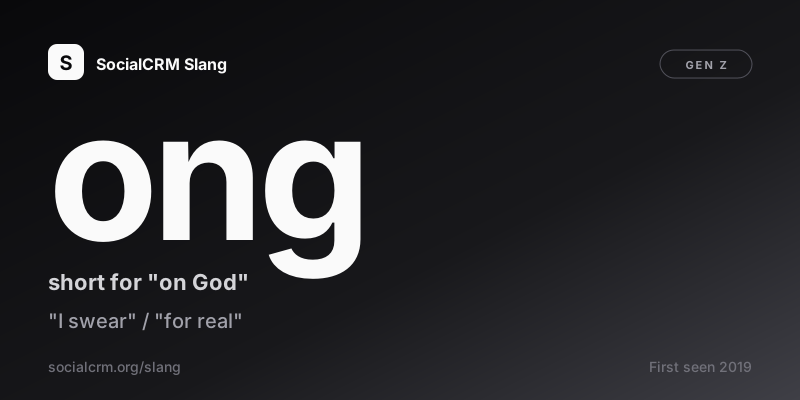
The sincerity oath.This is the "I promise" reading. "istg I sent it an hour ago" means the sender is staking their word on the claim being true. It is the same job ong does; ong compresses the oath into three letters, istg spells it out.
The exasperated vent.Here istg opens a complaint rather than backing a fact. "istg this app crashes every time I open it" is not really an oath; it is frustration boiling over into the keyboard. This register usually sits at the front of the sentence and pairs naturally with all caps.
The mock-threat.Between friends, istg sets up a threat nobody intends to carry out: "istg if you spoil the finale we are done." The comedy lives in the disproportion between the offense and the consequence. The closer the friendship, the harsher the fake consequence can get.
Examples of "istg" in a sentence
- "istg I sent it an hour ago, check your inbox"
- "istg this app crashes every time I open it"
- "istg if you spoil the finale we are done"
- "she said it to his face istg": a trailing istg backs the whole story.
- "ISTG I am deleting this group chat": caps raise the temperature in any register.
Istg vs ong, no cap, and yns
| Term | Stands for | How it works |
|---|---|---|
| istg | I swear to God | Speaker's oath: backs a claim, opens a vent, or sets up a joke threat |
| ong | On God | Compressed oath; covers the same sincerity ground as istg's first register |
| no cap | No lie | Flags a statement as true without invoking an oath |
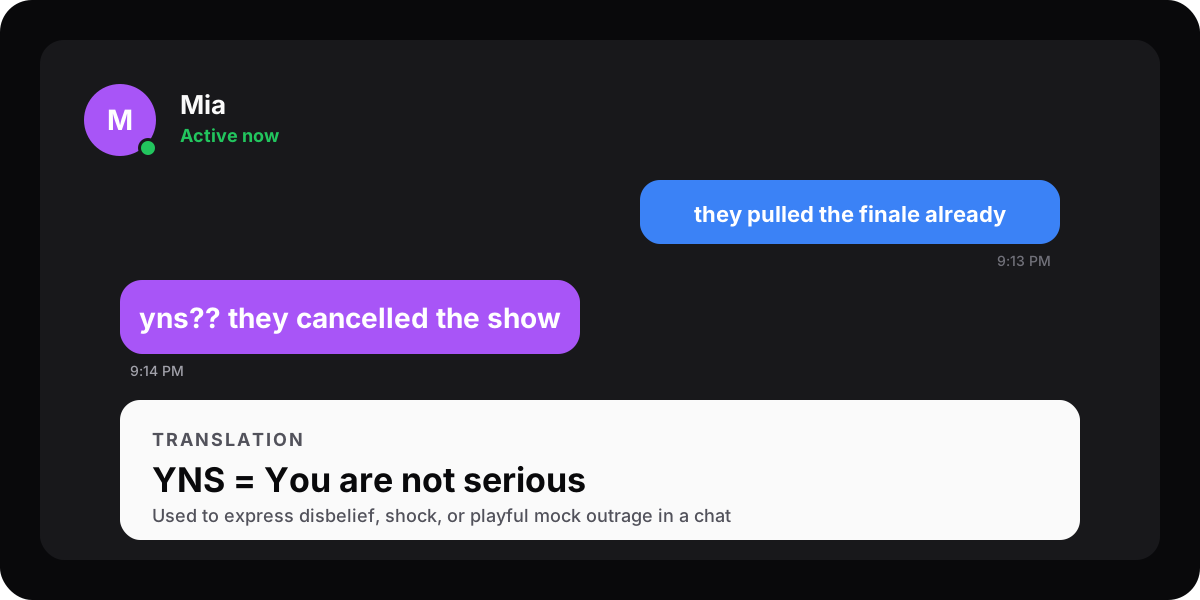
| yns | You're not serious | Listener's disbelief reaction to what someone else said |
The split that matters is direction. Istg, ong, and no capall travel from the speaker, attached to the speaker's own words. ynstravels the other way: it is the listener refusing to believe what just landed in the chat. Within the speaker's column, ong compresses the same oath istg spells out, and no cap drops the oath entirely in favor of a plain truth flag.
FAQ
What does istg stand for?
Istg stands for "I swear to God." It is a speaker's oath used three ways in text: to emphasize that a claim is true, to open a complaint in exasperation, or to set up a playful mock-threat between friends.
Is istg rude or offensive?
For most people istg is casual, not offensive. Some religious users avoid invoking God lightly and soften it as "isth" or read it as "I swear to goodness." Like most internet slang, it belongs in chats and comments, not in formal writing.
What is the difference between istg and ong?
They are the same kind of oath at different lengths. Istg spells out "I swear to God," while ong compresses "on God" into three letters. Istg also carries the exasperation and mock-threat registers more often, while ong leans toward pure sincerity and agreement.
Is istg always serious?
No. The words right after it set the register. "istg I was there" is a sincere oath, "istg this app crashes every time" is frustration, and "istg if you spoil the finale" is a joke threat between friends. Caps and repetition raise the temperature in every register.
What is the difference between istg and yns?
Direction. Istg comes from the speaker: you attach it to your own claim, complaint, or threat. Yns, short for "you're not serious," is the listener's disbelief reaction to something someone else just said. One swears; the other refuses to believe.
TL;DR
- Istg means I swear to God, a texting-era compression of a much older spoken oath.
- Three registers: a sincerity oath that works like "I promise," an exasperated complaint-opener, and a playful mock-threat between friends.
- It is the spelled-out cousin of ong; no cap flags truth without the oath.
- Unlike yns, istg comes from the speaker, not the listener.
- Religious users sometimes soften it as "isth" or read it as "I swear to goodness."