lmr
LMR is slang for "like my recent," a call to followers to like the poster's latest social media photo or video to boost engagement.
The SocialCRM Team
Quick definition
Lmr is internet shorthand for "like my recent," a direct ask to followers to go like the poster's most recent feed photo or video. It is posted to Instagram Stories, Snapchat, or in comments as a quick engagement nudge, most often by teens and Gen Z creators chasing a higher like count on a specific post.
What does "lmr" mean?
Lmr stands for "like my recent." It is a phrase, used as a call to action, where the speaker asks anyone reading to open their profile and tap the heart on the most recent post. The implied target is the current top-of-grid Instagram feed photo, but it works the same way for a recent Snap, TikTok, or tweet.
It functions as a complete utterance on its own. A blank Story background with the white text "lmr" is enough; the audience knows the rest. Sometimes it appears in longer form ("lmr please," "lmr lmr lmr," or "lmr in my bio") but the meaning never changes.
The register is casual and a little desperate by design. Lmr is a friend-to-follower ask, not a professional marketing move. Browse the full slang index for more terms in the social media engagement family.
Where does "lmr" come from?
Lmr took off on Instagram around 2018, the same period when the platform's ranking shifted away from chronological feeds and toward engagement-weighted distribution. Likes in the first hour mattered more than ever, so users started shouting for them directly. The acronym was a typing shortcut for "like my recent post," trimmed first to "like my recent," then to three letters.
From Instagram it spread to Snapchat, where it lives on Stories alongside other quick prompts like "sfs" and "streaks back." By 2020 it had become a recognisable Gen Z tic, sometimes used unironically, sometimes mocked in TikTok skits about wanting engagement too obviously.
How is "lmr" used?
Lmr is a phrase used as a call to action. The speaker is almost always a teen, Gen Z creator, or younger user with a personal account rather than a business profile. It appears in three main places: as plain text on an Instagram Story, as a comment under someone else's post (a softer way of saying "come check mine"), and as a Snapchat caption sent to a friend list.
It can be paired with an emoji heart or a screenshot of the post in question. Older creators tend to swap it for friendlier framings ("new post is up, let me know what you think") because lmr reads as begging when used past a certain age.
Examples of "lmr" in a sentence
- "Story: lmr please, just dropped my first photo dump in a month."
- "Lmr and I'll like yours back, drop your handle below."
- "Posting then sleeping, lmr while I'm offline."
- "Why does every freshman story say lmr at 11pm."
- "Lmr lmr lmr the algorithm hates me this week."
Related slang
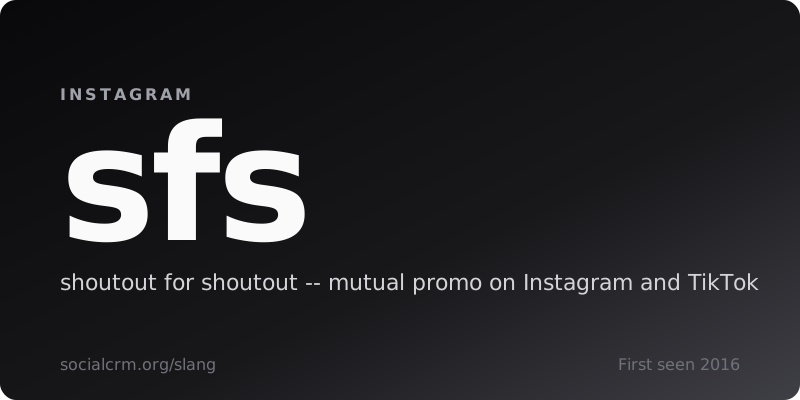
- sfs-- "Shoutout for shoutout." A two-sided engagement trade between accounts, where lmr is a one-sided ask.
- f4f-- "Follow for follow." The follow-level cousin of lmr, swapping likes for follows.
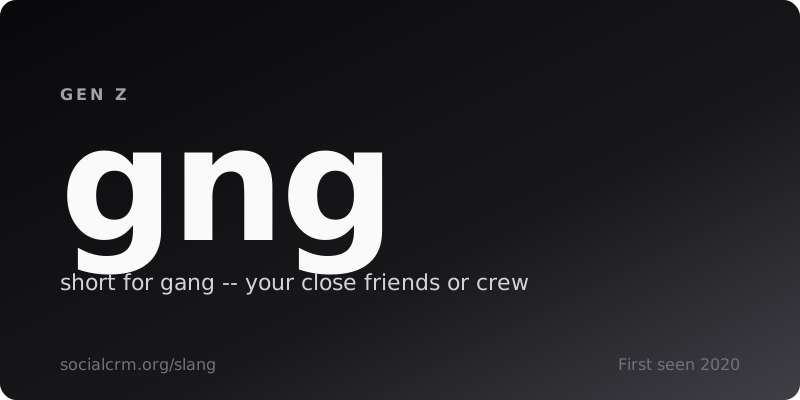
- gng-- "Gang." Often tagged in the same friend-circle Stories where lmr appears.
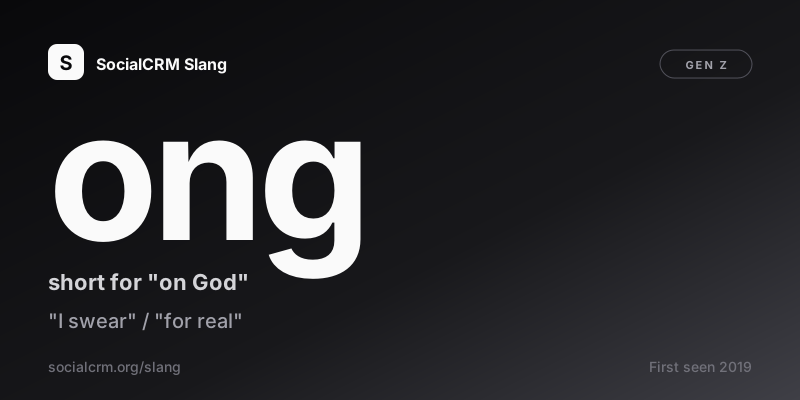
- ong-- "On God." Sincerity marker that sometimes lands next to lmr ("lmr ong it's my best post").
FAQ
What does lmr mean on Instagram?
On Instagram, lmr stands for "like my recent." It is a short request asking followers to like the poster's most recent feed photo or video. Users often post it to a Story or in a comment to boost their post's engagement.
Is lmr still used in 2026?
Yes, though less openly than in 2018 to 2021. Instagram's algorithm has shifted toward saves and shares, so some users have moved toward those asks. But lmr persists on Snapchat, Twitter, and among younger Gen Alpha users discovering it for the first time.
Does lmr work for boosting engagement?
Short-term, yes. A Story or DM blast can push a post's like count up quickly. Long-term, begged engagement rarely converts to genuine followers. Most creators use lmr sparingly and pair it with reciprocal offers like sfs or f4f deals.
What is the difference between lmr and sfs?
Lmr asks for a like on a specific post. Sfs (shoutout for shoutout) asks another account to post about you in exchange for you posting about them. Lmr is a one-sided ask; sfs is a mutual trade.
TL;DR
- Lmr is shorthand for "like my recent," an ask for followers to go like the poster's most recent photo or video.
- It emerged on Instagram around 2018 when the algorithm started weighting early engagement, then spread to Snapchat and TikTok.
- Used most by teens and Gen Z on personal accounts; reads as begging in older or professional contexts.