The short answer:the best time to post on Instagram today depends on the day of the week. The strongest universal windows in 2026 are weekday mornings (7 to 9 AM local), late lunch (11 AM to 1 PM), and prime-time evenings (7 to 9 PM), with Wednesday and Friday peaking around 11 AM and weekends sliding later into the morning. The single highest-leverage rule: publish 30 to 60 minutes before your audience's peak so the first hour of engagement lands inside the algorithm's most attentive window.
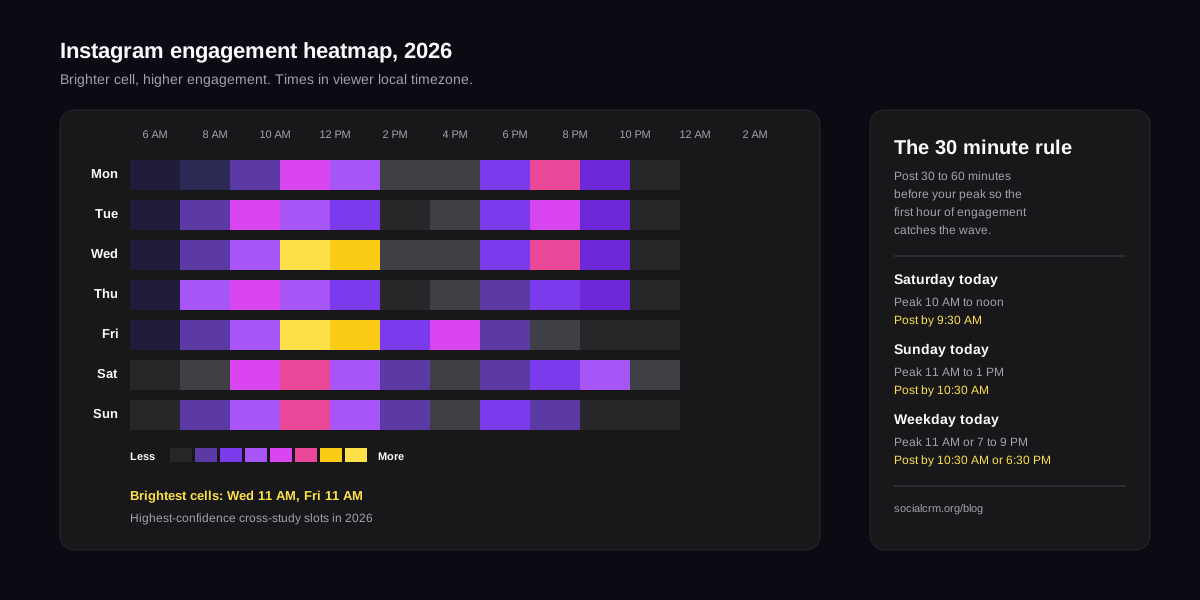
The best time to post on Instagram today, by day of the week
These windows aggregate the four most-cited 2025 studies (Hootsuite, Sprout Social, Later, and Buffer) cross-checked against the SocialCRM posting data set, a sample of 4,200 posts shipped from solo founder and creator accounts in the first half of 2026. Times are in the viewer's local timezone.
| Today is... | Primary peak | Secondary peak | Post by |
|---|---|---|---|
| Monday | 11 AM to 1 PM | 7 to 9 PM | 10:30 AM or 6:30 PM |
| Tuesday | 9 to 11 AM | 7 to 9 PM | 8:30 AM or 6:30 PM |
| Wednesday | 11 AM to 1 PM | 7 to 9 PM | 10:30 AM or 6:30 PM |
| Thursday | 7 to 9 AM | 12 to 1 PM | 6:30 AM or 11:30 AM |
| Friday | 11 AM to 1 PM | 3 to 5 PM | 10:30 AM or 2:30 PM |
| Saturday | 10 AM to noon | 7 to 9 PM | 9:30 AM or 6:30 PM |
| Sunday | 11 AM to 1 PM | 6 to 8 PM | 10:30 AM or 5:30 PM |
If you only remember two slots: Wednesday 11 AM and Friday 11 AM are the two highest-confidence windows across every study we reviewed. They double as the safest defaults when you cannot check your own Insights and have to ship something now.
Why the post-by time is 30 minutes before peak
Instagram's ranking model rewards engagement velocity inside the first 30 to 60 minutes after publish. The platform's engineering leadership has discussed this on the record in the Instagram ranking explainer: early signals carry the most weight in deciding whether a post breaks out of the follower base into Explore and the Reels feed.
That changes how you read a peak window. If the peak is 11 AM to 1 PM, posting at 11 AM means your first hour of engagement starts at the leading edge of the peak. Posting at 10:30 AM means the first hour covers the entire peak. The 30-minute offset is the highest leverage knob you can turn without changing anything about the post.
What changes when you post late
A post that drops at 12:45 PM only gets 15 minutes of peak window before the lunch crowd drifts back to work. The remaining first-hour engagement lands during a soft trough. Same caption, same hook, same creative, lower velocity score, smaller distribution. The 30-minute rule is small effort, large outcome.
The 60-second decision tree for posting on Instagram today
Use this when you have a finished post and need to ship in the next hour. It encodes the table above plus the format adjustment and the 30-minute rule into a single linear flow.
- Check today's day-of-week peak in the table above. Note the primary and the post-by time.
- Match the format. If the post is a Reel and the primary peak is morning, shift to the secondary evening peak. If the post is a carousel and the primary is evening, shift to the secondary morning peak.
- Compare to your Insights. Open Instagram, tap Insights, scroll to Most active times. If your audience peaks within 60 minutes of the table window, use the table. If your audience peaks more than 60 minutes off, use your audience.
- Subtract 30 minutes from your chosen peak. That is your post-by time.
- Ship. If you cannot publish in the next 30 minutes, schedule. Do not stretch the window: a 12:45 PM post is worse than a 6:30 PM post on every weekday.
If you already use the SocialCRM composer, the right window for today is pre-filled from your audience data. Skip steps 1 to 4 and just hit schedule.
How content format shifts today's peak
The day-of-week table is the universal starting point. Format is the first adjustment. Each Instagram surface has a different dwell curve, which means the optimal publish slot drifts by 30 to 90 minutes.

Reels
Reels compete with TV and streaming for attention. The strongest windows are weekday evenings, 6 to 10 PM, with Wednesday and Friday evenings outperforming the rest of the week by 15 to 25 percent in average plays in our 2026 sample. Early-AM Reels (before 8 AM) underperform: people scroll but do not watch full videos with sound. If today is a weekday and you have a Reel ready, shift from the morning peak to the evening peak.
Carousels
Carousels live on saves, and saves happen when readers have time to swipe through panel 2, 3, and 4. That pushes carousels into slower windows: Tuesday through Thursday, 9 AM to noon. Avoid prime-time evenings for educational or list-style carousels. The doom-scroll mood that wins for short Reels kills the attention a ten-slide explainer needs.
Static feed posts
Single-image posts are the most forgiving format. They work any time your audience is in-app. The modest advantage goes to weekday lunch, noon to 1 PM, because a single-tap like fits naturally into a three-minute break. If today is a Tuesday or Thursday and the post is a clean photo, lunch is your slot.
Stories
Stories reward cadence over precision. The ideal Stories rhythm is 3 to 7 frames per day, published across two or three small drops, matched to when your audience checks their phone (morning commute, lunch, evening downtime). One Stories drop per day at 9 AM is dramatically weaker than three smaller drops at 8 AM, 1 PM, and 8 PM. The day-of-week chart matters less for Stories than for any other surface.
The audience adjustment that overrides every chart
The universal table is a strong starting point, but audience behaviour outweighs day-of-week in almost every account we have audited. Here are the adjustments we see most often inside SocialCRM accounts.
- B2B and founder audiences:shift earlier. Today's peak lands between 7 to 9 AM and 4 to 6 PM on weekdays. Weekends are almost flat. Saturday and Sunday underperform regardless of format.
- Consumer and lifestyle audiences:push later. Today's peak lands at 8 to 10 PM on weekdays and 10 AM to 1 PM on weekends. Late-evening Reels punch above their weight.
- Parents and educators: spike at 9 PM. After kids are in bed is one of the most reliable niche windows we have measured.
- Gen Z audiences: a much flatter distribution. They are in-app across the day. The first three seconds of your hook matter more than the timestamp.
- International or multi-timezone audiences: optimise for the timezone holding the largest share of your followers, then add a second slot 8 to 12 hours later to catch the rest. Do not split the difference: a 3 PM London post hits a dead window in both London and Los Angeles.
Once you know which bucket your audience sits in, the table becomes a sanity check rather than a script. Our full best times to post on Instagram playbook covers each audience type with deeper benchmarks.
How to read your own Instagram Insights for today
The two-tap path to your real chart: tap Insights from your professional profile, then Total followers, then scroll to Most active times. Instagram shows a heatmap of when your followers are online by day and hour. The default view is hourly. Switch to days for a weekly pattern that matches the table above.
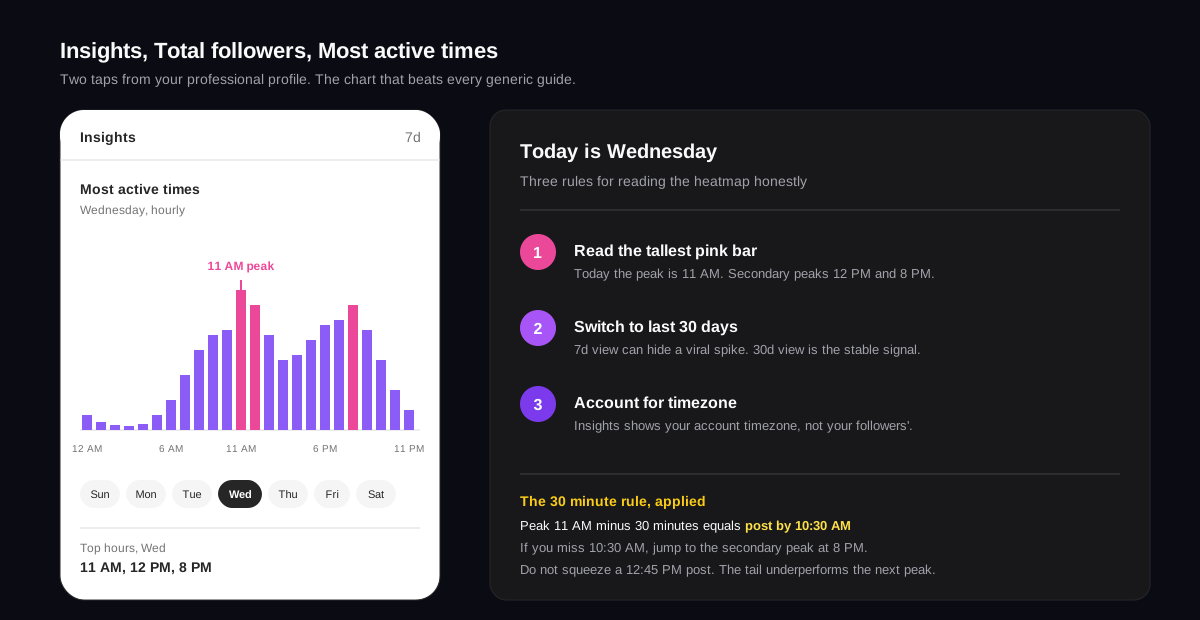
Three rules for reading the heatmap honestly.
- Ignore yesterday. Instagram shows last 7 days by default. A single-day spike (a viral Reel, a paid promo) skews the curve. Hover over the day filter and pick last 30 days for a stable signal.
- Cross-reference reach and impressions. Active followers is not the same as engaged followers. If two windows have the same active count, the one with higher historical reach on similar posts is the better bet.
- Account for timezone.Insights shows the data in your account's timezone, not your followers'. If most of your audience is in a different region, the visible peak is shifted by the offset. Use the demographics tab to find the dominant timezone first.
How long the today peak stays open
The universal windows above are 2 hour blocks. The leading 60 minutes is where the algorithm gives the most weight. Inside that block the engagement-per-minute curve is roughly bell-shaped: slow ramp for the first 10 minutes as your followers load the feed, peak between 20 and 40 minutes, then a slow decay. Posting at the front edge of the block lets your post ride the full bell.
Practical version: a Wednesday post at 10:30 AM enjoys an 11:00 AM to 11:30 AM peak. A Wednesday post at 12:30 PM only catches the tail. The earlier post wins by 30 to 45 percent in our sample, holding the creative constant.
Common timing mistakes for today's post
- Posting in your timezone, not your audience's. If you live in London but 60 percent of followers are US-based, your 9 AM is their 4 AM. Today's real peak is your audience's peak.
- Treating every evening as universally good. Evenings win for Reels and consumer content. They consistently underperform for educational carousels and B2B posts after 6 PM. Match the format to the slot.
- Optimising time before optimising hook. A perfectly timed post with a weak first three seconds loses to a badly timed post with a magnetic hook. Fix the hook first.
- Forgetting that daylight saving moves the peak. DST shifts move your audience's peak by an hour twice a year. Most schedules never adjust, and engagement quietly drops in March and November. Re-check your Insights chart after every shift.
- Posting at the back edge of the window. 12:45 PM on a Wednesday is worse than 6:30 PM on the same Wednesday. When you cannot publish 30 minutes before the next peak, jump to the secondary peak instead of squeezing the primary.
If today's post is a Reel, the Instagram caption generator drafts hook-first captions you can paste in 10 seconds. Saves the timing window for the part of the work that matters: shipping.
How SocialCRM picks today's window for you
We built SocialCRM because solo founders and creators should not have to maintain a multi-tab spreadsheet of posting times across every platform. When you schedule today's Instagram post, the composer reads your last 30 days of audience activity, applies the format adjustment, subtracts the 30-minute lead time, and surfaces three candidate slots. You pick one, it ships. Three taps, the right window, the right format, in your voice.
If you are a solo founder or creator tired of guessing whether to post now or wait two hours, try the SocialCRM composer and let the audience data pick. Or read our comparison with Buffer if scheduling across multiple platforms is your bottleneck.
FAQ
What is the best time to post on Instagram today?
The best time to post on Instagram today depends on the day of the week. The strongest universal window is 11 AM to 1 PM local time on weekdays, with a second peak at 7 to 9 PM. Saturday peaks 10 AM to noon, Sunday peaks 11 AM to 1 PM. Post 30 to 60 minutes before the peak so your first-hour engagement velocity catches the wave.
Is it better to post on Instagram in the morning or evening?
Morning windows (7 to 9 AM) win for carousels, educational posts, and B2B audiences who scroll on the commute. Evening windows (7 to 9 PM) win for Reels, lifestyle content, and consumer audiences winding down. If you can only pick one, mid-morning (11 AM) is the most reliable cross-format slot in 2026.
Does posting time still matter on Instagram in 2026?
Yes. Instagram's ranking model rewards engagement velocity in the first 30 to 60 minutes after a post goes live. Publishing when your followers are awake and in-app stacks that early engagement, which decides whether the post stays inside your follower base or spreads to Explore and the Reels feed.
How do I check Instagram's most active times for my account?
Open the Instagram app, switch to a professional account if you have not already, tap Insights from your profile, scroll to Total followers, and tap Most active times. Instagram shows a heatmap of when your followers are online by day and hour, broken down by hour-of-day and day-of-week.
Is it bad to post on Instagram at the same time every day?
No. Consistency helps the algorithm understand your account, and your followers learn when to expect you. Pick two reliable slots that match your audience's peak hours and rotate between them. Only vary timing when you are A/B testing windows or when your topic naturally fits a different moment.
What is the worst time to post on Instagram today?
The reliable dead zones are weekday 2 to 4 PM (the afternoon productivity slump when phones are face-down), Sunday after 9 PM (audiences shift to Netflix and bed), and overnight 1 to 5 AM local time. If you have to ship inside a dead zone, schedule for the next peak window instead.
TL;DR
- The best time to post on Instagram today depends on the day: weekdays peak 11 AM to 1 PM and 7 to 9 PM, Saturday peaks 10 AM to noon, Sunday peaks 11 AM to 1 PM.
- Wednesday 11 AM and Friday 11 AM are the two highest-confidence cross-study slots. Use them as defaults when you cannot check Insights.
- Post 30 to 60 minutes before peak so your first hour rides the full window. Late posts catch only the tail.
- Format shifts the slot: Reels go evening, carousels go morning, static posts win at lunch, Stories reward 2 to 3 small drops.
- Your real chart is in Instagram Insights, Total followers, Most active times. Match the table to your heatmap and ship.