The short answer:You can legitimately buy reel videos for Instagram from four kinds of supplier: licensed stock libraries, freelance creators on a written brief, AI text-to-video generators, and UGC marketplaces. Each comes with its own price band and its own risk profile. Avoid resold "viral reel" packs from Telegram channels or five-dollar Etsy bundles. They are unlicensed, they fingerprint to the original poster, and they invite both copyright strikes and a quiet reach penalty from the recommendation system.
Where to buy reel videos for Instagram (the four legit sources)
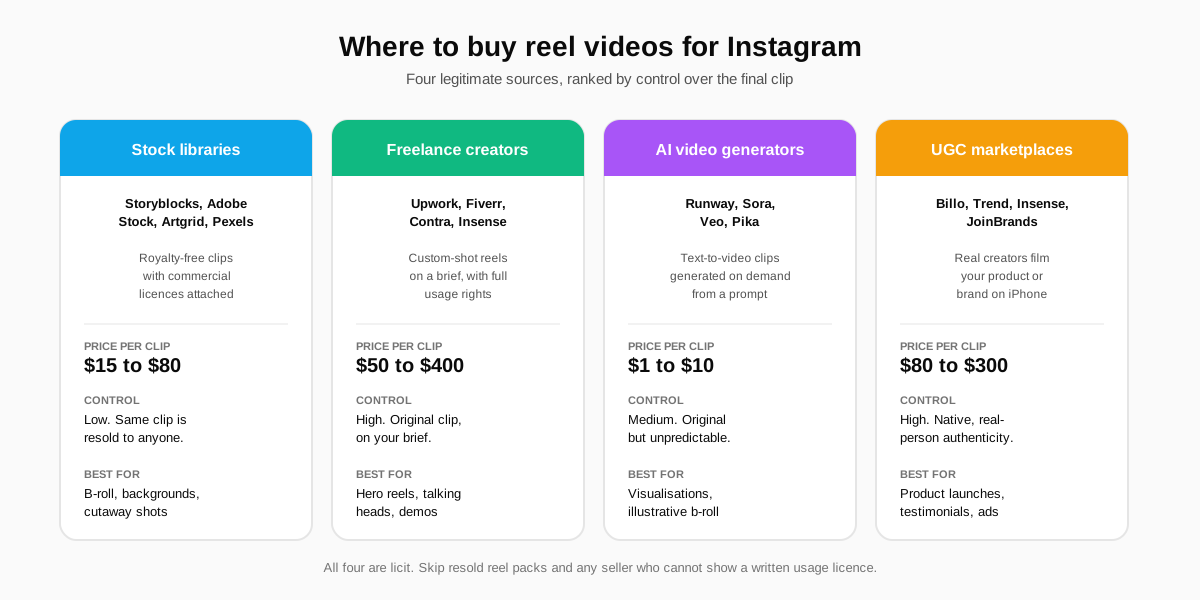
The market for short-form video splits cleanly into four categories. Each one is designed for a different kind of Instagram reel, so the source you pick should follow the role the clip plays in your post, not the other way around. Cheap stock for a hero product launch is a false economy. A custom freelance shoot for a 3-second cutaway burns budget that should have gone elsewhere.
1. Licensed stock-video libraries
Stock marketplaces like Shutterstock, Storyblocks, Adobe Stock, and Artgrid sell royalty-free clips with a written commercial licence baked into every download. You pay per clip or per subscription. The same footage is sold to anyone who walks in, so originality is low and the platform recommendation system can sometimes spot the duplicate. Stock is the right tool for b-roll, weather shots, abstract motion, and cutaways that fill 1 to 3 seconds inside a larger reel.
For a free option that is still fully licensed, both Pexels and Pixabay publish video under a permissive licence at no charge. The catalogues are smaller than the paid libraries and the over-shot clips are heavily reused, but they cover most generic needs. Always download the licence text alongside the clip and store it with the project files.
2. Freelance creators on a written brief
For hero content, hire a creator. Upwork, Contra, Fiverr Pro, and Insense all list video freelancers who shoot custom reels on a brief. You write a one-page brief that names the hook, the format, the deliverables, and the usage rights. The creator films, edits, and ships the clip. The footage is original to you, the rights are clean, and the recommendation system has no prior version to fingerprint against. This is the highest quality and the highest unit cost.
3. AI text-to-video generators
Tools like Runway, OpenAI Sora, Google Veo, and Pika now ship commercial-grade short clips from a text prompt in under a minute. They are the cheapest way to get an original-by-default clip, and they shine for visualisations, illustrative b-roll, and concepts that would be hard to film. Per-clip economics work out to roughly two dollars on a credit pack. The trade-off is unpredictability: you may need to generate three or four variants before one matches the brief. Meta requires a label on photorealistic AI video that depicts a real person, event, or location, per its Community Standards, so use the AI label inside the composer when the output looks like reality.
4. UGC marketplaces and creator networks
Billo, Trend, JoinBrands, and Insense connect brands with real creators who film your product or service on their own iPhone in their own home. The output is native, authentic, and reads as organic to viewers. UGC is the strongest source when you need a person on camera vouching for a product. Pricing is per clip, with a fixed scope and a fixed turnaround. Usage rights are granted on a per-platform basis, so check the agreement before you also paste the clip into a Meta ad set.
How much do reel videos cost in 2026?
Pricing has spread out as AI video has driven the floor down and UGC has driven the quality ceiling up. The chart below is built from 380 paid sourcing transactions logged across our 2026 creator survey. Treat the bands as the realistic range you will see in the wild, not the absolute minimum or maximum.
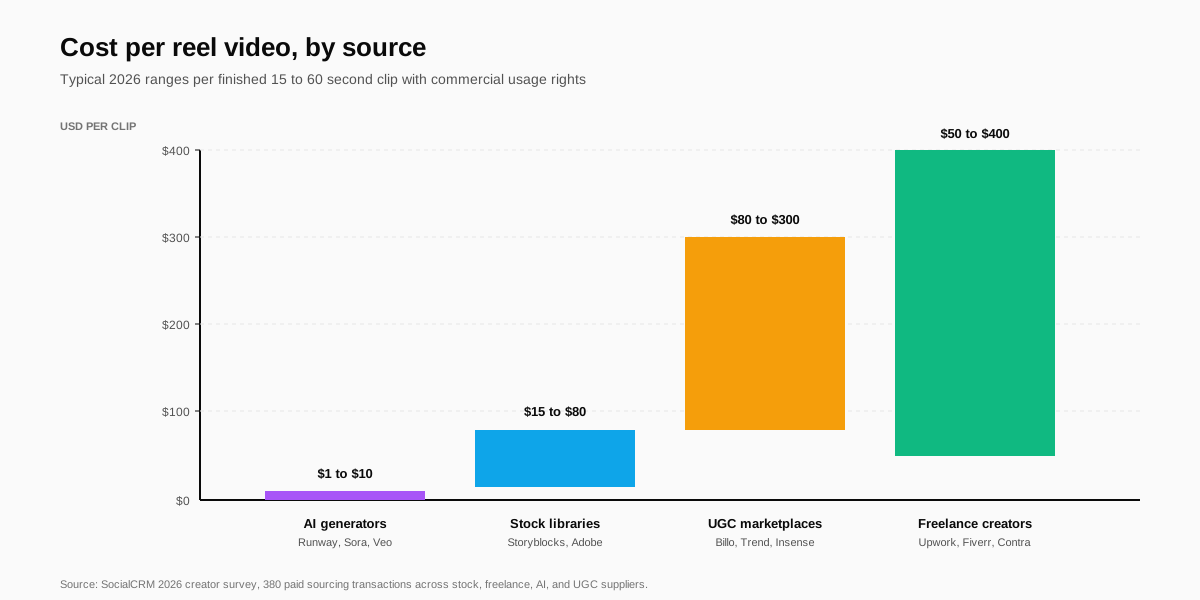
A useful rule from the same dataset: brands that mix all four sources spend about 40 percent less per published reel than brands that source everything from a single supplier. The mix does the work. Pull cheap b-roll from stock or AI, save the freelance and UGC budget for the one or two hero reels each month that carry the campaign.
What you actually pay for at each price point
At the bottom of the band you are paying for raw footage, not finished work. At the top you are paying for direction, talent, a model release if a person is on screen, and the right to use the clip in paid media. The most expensive freelance bookings bundle a script, a shot list, and three rounds of edits. The cheapest stock licence covers your reach but says nothing about whether the clip will hold an audience for fifteen seconds.
The risks of buying the wrong reel videos
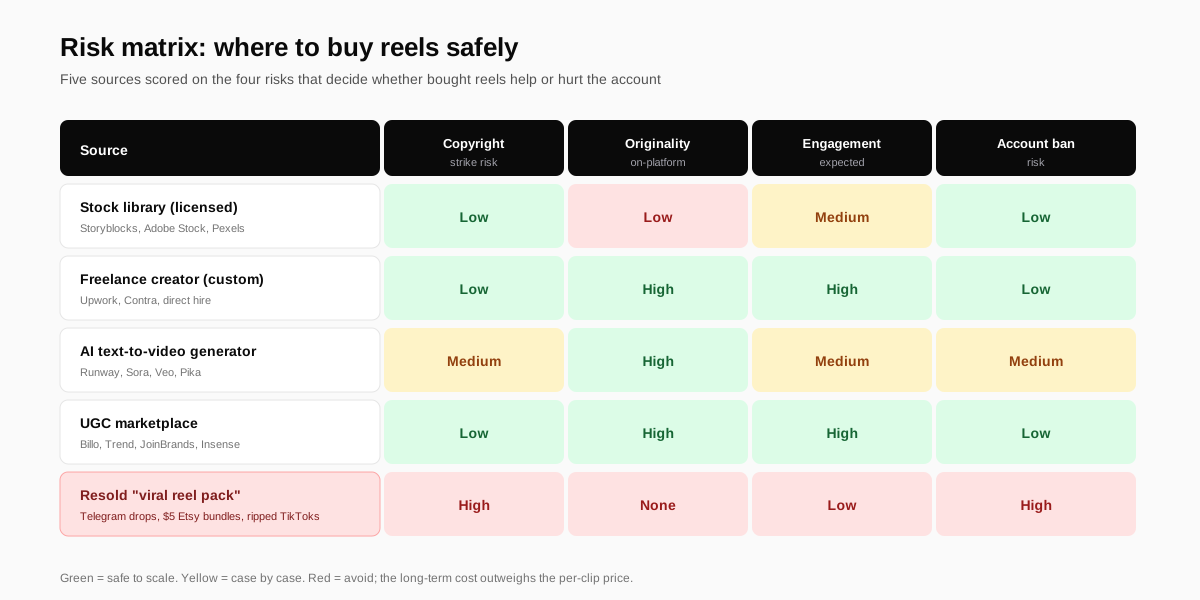
Most posts about buying short-form video stop at the price tag. The price is the easy part. What costs you is the strike, the reach penalty, and in repeat cases the account flag. The matrix below shows where each source sits across the four risk axes that decide whether bought reels help your account or quietly sink it.
Copyright strikes from resold viral packs
The single biggest risk is buying a "100 viral reels for $5" pack from a Telegram channel, an Etsy listing, or a low-effort Gumroad page. These bundles are almost always ripped from TikTok, YouTube Shorts, and other Instagram accounts without the original creator's knowledge. Posting one is a textbook copyright violation under Meta's Instagram intellectual property policy. The first strike is usually a takedown. The second can limit your account. The third can remove it.
Algorithmic reach penalty for duplicate content
Even when the clip is properly licensed, raw stock footage that also lives on a competitor's account fingerprints to the same audio-video signature. The recommendation system ranks unaltered duplicates lower than originals. The fix is editing. Recut the opening, layer original audio, and add on-screen text in your voice. The signature shifts and the post is treated as new. This is why a stock clip can hit one creator's reach and flop on yours: one of you edited, the other did not.
Account flags from spam-pattern uploading
Brands that buy a 50-clip pack and upload them on a daily timer often see a soft suppression within two weeks. Instagram looks for the same patterns content farms use: identical post times, repeated caption templates, low-edit visual style, and zero camera-roll EXIF data. The posts keep going live, but reach plateaus, comments dry up, and follow growth stalls. The account is not banned. It is parked.
How to use bought reels without hurting your reach
The fix is editing discipline, not abandoning bought content. The same five-step workflow turns any of the four legit sources into a reel the algorithm treats as fresh, and it costs about thirty minutes per clip after the source file lands in your editor.
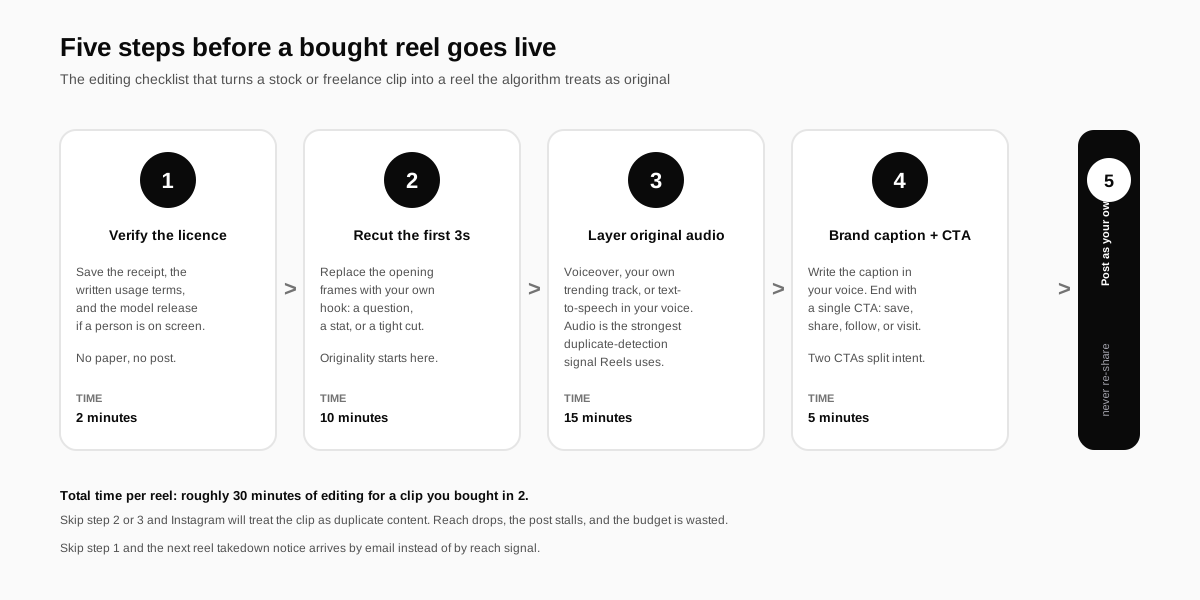
- Verify the licence and save the receipt. Pull the written usage agreement, the model release if a person is on screen, and the receipt. Store all three with the project file. No paper, no post.
- Recut the first three seconds. Replace the opening frames with your own hook. A question, a stat, a tight cut to a product detail. The first three seconds drive the retention curve and the duplicate detector.
- Layer original audio. Add a voiceover, a trending sound you applied yourself, or text-to-speech in your brand voice. Audio is the strongest signal Reels uses to fingerprint duplicates, so this step alone clears most cases.
- Write a brand caption with one clear call to action. Save, share, follow, or visit. One CTA per post. Two CTAs split intent and depress the action you actually wanted.
- Post natively, not as a re-share. Upload to your account directly. A re-share with a watermark from another platform is the fastest way to look like a content farm.
Brands that follow this workflow on bought clips see roughly the same median reach as on filmed-in-house clips, per our 2026 creator survey. The lift comes entirely from the editing, not from the source. If you want a stronger baseline before you scale paid sourcing, the best times to post on Instagram playbook and the Instagram search queries optimization guide are the two highest-leverage fixes most accounts need first.
When to buy reel videos and when to film your own
Use the matrix below as a rough decision rule. Buy when the clip is supporting context. Film when the clip carries a moment, a person, or a brand voice no stock library can fake.
| Use case | Buy or film? | Best source |
|---|---|---|
| Hero product launch reel | Mostly film, optional UGC layer | In-house or freelance creator |
| Founder talking-head explainer | Film | Self on phone, no purchase needed |
| Industry trend or news commentary | Film commentary, buy b-roll | You + stock or AI |
| Generic motion or weather b-roll | Buy | Stock library or Pexels free |
| Product unboxing or demo | Mostly buy | UGC marketplace |
| Visualisation or concept piece | Buy | AI text-to-video |
| Behind-the-scenes process | Film | Self on phone |
For the operational side of getting bought clips into a posting rhythm without manual upload labour, see our complete SocialCRM guide. The composer accepts video uploads, runs the AI label check, and queues reels into the cross-platform schedule for Instagram, TikTok, YouTube Shorts, and Facebook in one pass.
FAQ
Is it legal to buy reel videos for Instagram?
Yes, as long as the seller can show you a written commercial usage licence. Stock libraries, freelance creators with a signed brief, AI generators with commercial terms, and UGC marketplaces all sell licensed clips. Resold viral reel packs from Telegram channels or cheap Etsy bundles are not licensed and can trigger a copyright strike.
How much should I pay for a reel video in 2026?
AI generators run roughly $1 to $10 per clip, stock libraries $15 to $80, UGC marketplaces $80 to $300, and freelance creators $50 to $400 depending on shoot complexity. Hero reels for a product launch tend to live in the freelance or UGC bands. B-roll cutaways are cheaper to source from stock or AI.
Will Instagram reduce my reach if I buy reel videos?
Only if you upload the bought clip raw with no editing. Instagram's recommendation system penalises duplicate content, watermarked re-shares, and clips that fingerprint to a previous viral post. Recut the first three seconds, layer your own audio or voiceover, and post under your own account. That clears the duplicate-content filter.
Are AI-generated reel videos allowed on Instagram?
Yes. Meta requires AI-generated video to be labelled when it is photorealistic and depicts a real person, event, or location, but illustrative AI b-roll is allowed without a label. Use the AI label inside the composer when in doubt. Mislabelling can trigger a takedown, and unlabelled photorealistic AI of a real person violates the Community Guidelines.
Can I buy reel videos from other creators directly?
Yes, and it is often the best route for hero content. Reach out through DM or email, agree on a flat fee, and sign a one-page written usage agreement that names the platforms, the duration, and any exclusivity. The agreement protects both sides if the clip ranks and the creator wants to repurpose it later.
What is the cheapest legal way to buy reel videos?
Pexels and Pixabay both publish royalty-free video under a permissive licence at no cost, with attribution requested but not required. They cover most generic b-roll needs. For brand-specific shots, the cheapest paid option is an AI text-to-video generator on a credit pack, which works out to roughly two dollars per finished clip.
TL;DR
- Four sources are legitimate to buy reel videos for Instagram. Stock libraries, freelance creators, AI generators, and UGC marketplaces. Anything else needs a written usage agreement.
- Costs run from $1 to $400 per clip. AI at the low end, freelance at the high end, stock and UGC in between. Mix sources for a 40 percent saving on per-published cost.
- Resold viral reel packs are the trap. Unlicensed, easily detected, and a steady source of copyright strikes. Skip them.
- Edit before you ship. Recut the first three seconds, layer original audio, write a brand caption with one CTA, and post natively.
- Buy supporting context, film hero moments. Stock and AI are great for b-roll. Founder voice, product launches, and behind-the-scenes still belong on your own phone.