The short answer:Cheap Instagram followers are a trap. The packs that sell at $5 per 1,000 are bots that Instagram's spam team detects within 24 to 48 hours. The pricier tiers (aged accounts, click-farm humans) look more convincing but still trigger an engagement-rate collapse that the recommendation system reads as a quality signal, plus a brand-deal audit failure that costs more in lost revenue than the followers ever cost in cash. The honest move is to skip the purchase and run the five-step organic playbook instead. It takes longer. It actually works.
What "cheap Instagram followers" actually means
The grey market for Instagram followers in 2026 splits into four tiers. Each one promises growth and delivers something else. Knowing which tier a seller is actually peddling tells you in advance how fast Instagram will catch the purchase and how much of the spend you will get to keep on the account.
Tier 1: Empty bot followers
The cheapest tier sells for $1 to $5 per 1,000 followers and ships within minutes of payment. The followers themselves are empty profiles: a default avatar or a generic stock photo, a random alphanumeric handle, zero posts, and a follower-to-following ratio that often runs into the thousands. They are spun up in bulk by an automation script. Meta's spam team has been catching these patterns since 2018 (per the company's long-running integrity reports) and most of the pack is purged within 48 hours.
Tier 2: Drop-protected bot packs
Sellers learned that buyers want their follower count to stick, so the next tier up adds a refill clause. For $5 to $15 per 1,000, the seller commits to topping the count back up whenever Instagram removes a batch. The followers are still bots from the same pool. The fingerprint is identical, so each refill makes the account look more pattern-matched to Meta's detector, not less. Drop protection extends the visible follower count for a few weeks at most before the broader account gets flagged for repeated inauthentic activity.
Tier 3: Aged or recycled accounts
At $25 to $60 per 1,000, sellers offer accounts that look more like real people: a profile picture, a few old posts, a plausible follower-to-following ratio. These are usually hijacked accounts (passwords stolen in a breach), dormant accounts the original owner has not touched in years, or accounts farmed long enough to age past Instagram's newest-account heuristics. Detection is slower but still happens, and the original owners sometimes recover their accounts and trigger a chargeback that Meta uses to scrub the follower from your count anyway.
Tier 4: Click-farm humans
The most expensive tier ($80 to $200 per 1,000) routes orders through a paid-task platform where real people in low-cost labour markets follow accounts for fractions of a cent per follow. The accounts are real and the activity passes the crudest detection layer. What they fail is the audience-match layer: a North American skincare brand suddenly receives 2,000 followers from a single city in a different region, none of them in the brand's target demographic. Brand-deal auditors and the recommendation system both spot the geographic and demographic anomaly inside a week.
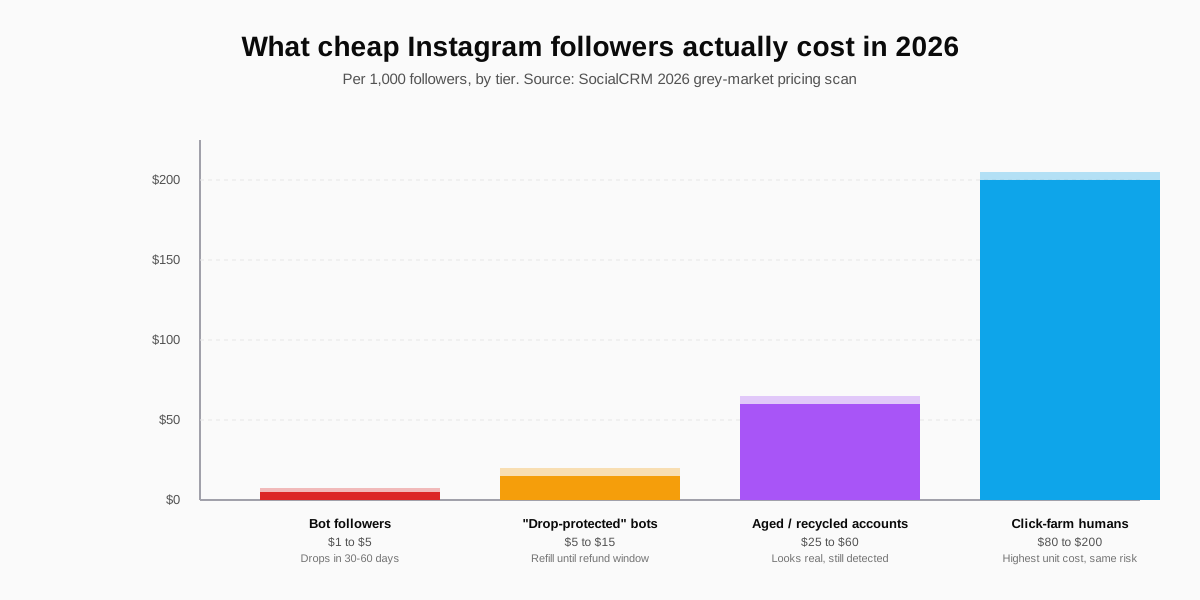
How much do cheap Instagram followers cost in 2026?
On the surface, $5 for 1,000 followers reads as a steal. The pricing collapses once you account for the followers Instagram will remove, the engagement-rate collapse, and the brand-deal revenue the audit cuts off. A typical 5,000-follower bot pack costs $25 up front and roughly $400 to $1,200 in lost sponsorship eligibility per month, based on the floor sponsor rates we see paid out across our 2026 creator survey. The unit-cost math runs the wrong direction once you include those downstream costs.
The hidden multipliers on the sticker price
Three things compound onto the up-front price. First, the follower drop: most of the pack vanishes within a month, so the effective price per surviving follower is two to five times the sticker. Second, the reach penalty: posts after the purchase reach 30 to 60 percent fewer of your real followers because the recommendation system reads the engagement collapse as a quality signal. Third, the brand-deal cliff: every modern sponsor runs an audit before signing a contract, and a flagged audience disqualifies the account from the deal entirely.
Hidden costs and how Instagram detects fake followers
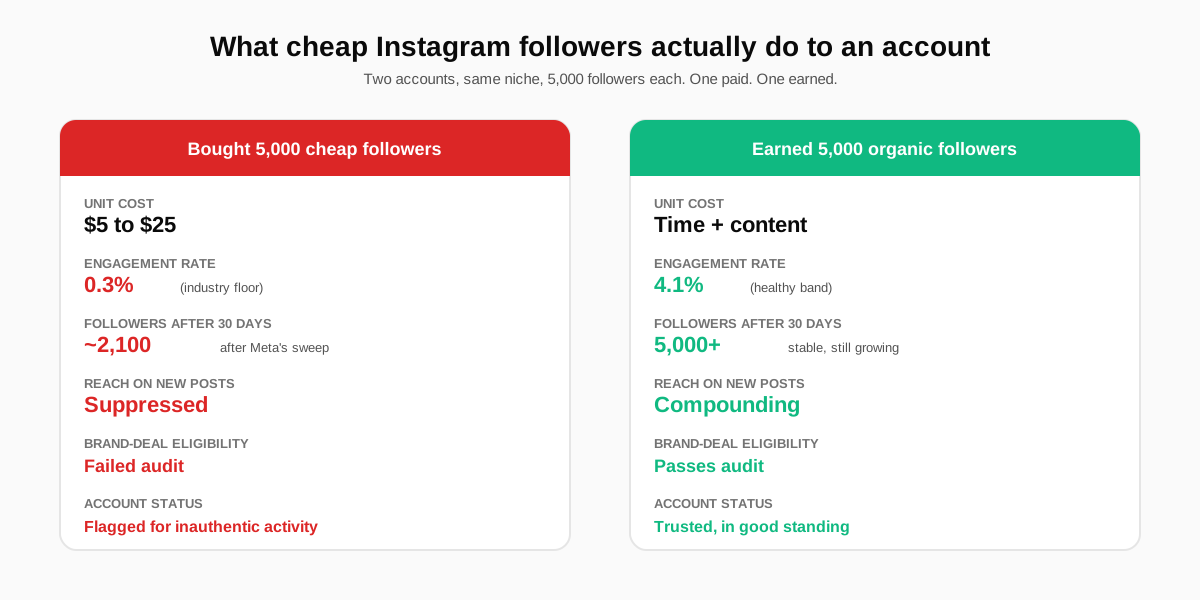
Most articles that pitch cheap Instagram followers stop at the price. The price is the easy part. What costs you is the engagement-rate collapse, the algorithmic suppression that follows, the brand-deal audit, and in repeat cases the account flag for inauthentic activity. The matrix below maps each follower tier across the four risks that decide whether a purchase merely wastes the money or actively damages the account.
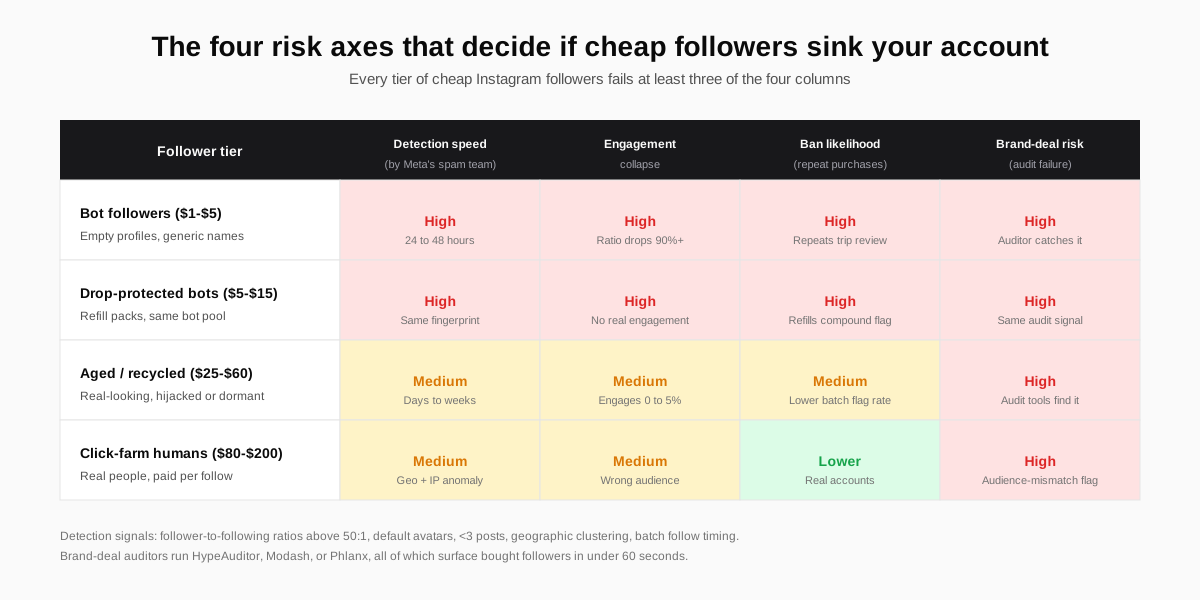
Engagement rate collapses inside 48 hours
Engagement rate is the single hardest metric to fake. It is likes plus comments divided by follower count, and bots add to the denominator while contributing nothing to the numerator. An account at 4 percent on 1,000 real followers falls to 0.7 percent after a 5,000 bot pack lands. Brand-deal scouts treat anything below 1.5 percent as a red flag, per the rate cards published by Later's 2026 influencer rate report. A 5,000-follower account with 0.7 percent engagement is worth less to a sponsor than a 1,000-follower account at 4 percent, which is the inverted incentive that makes the purchase a self-inflicted wound.
Algorithmic suppression follows the engagement signal
The Instagram recommendation system was overhauled in 2024 to weight the ratio of engaged followers to total followers more heavily than raw follower count. Adam Mosseri confirmed the change publicly on his Creators blog. When a buyer pads the follower count without the engagement backing it, the ratio cratered, and reach on subsequent posts falls roughly 30 to 60 percent. That suppresses real engagement further, which sinks the ratio more, which suppresses reach more. The loop is sometimes called the spiral, and a single bot purchase can kick it off on an otherwise healthy account.
Brand-deal audits surface the purchase in under a minute
Every modern brand-deal pipeline runs an automated audit before a contract is signed. The standard tools are HypeAuditor, Modash, and Phlanx. All three score follower authenticity by running the same detection signals Instagram uses internally: follower-to-following ratios, default avatars, post-count distribution, geographic clustering, and posting cadence on the followers themselves. A bot-padded account scores in the lowest decile within seconds, and most sponsorship contracts treat that score as an automatic disqualification.
Account suspension follows repeat violations
Instagram's Community Guidelines on inauthentic activity treat buying followers as a violation. The first detection usually triggers a silent purge of the bots and a short reach suppression. Repeat purchases compound into account warnings, feature limitations (loss of comments, DMs, or the ability to follow new accounts), and in the worst cases a permanent suspension. Recovery from a suspension involves a manual review and is rarely successful when the trigger is a confirmed buy.
How Instagram detects bought followers
The detection model has been public for years. Sellers know it. They optimise around the cheapest signals (avatar, post count) and ignore the harder ones (geographic clustering, batch-follow timing). Below are the five signals that catch nearly every cheap-follower purchase, in the order Meta's integrity team runs them.
- Follower-to-following ratio. Real users follow more accounts than they have followers, especially on new accounts. A new follower with 5,000 outbound follows and 12 followers themselves trips the first filter instantly.
- Default avatar and zero-post profile. Bot accounts skip the time-consuming step of uploading a profile photo or any posts. Any flood of new followers where most of them ship with the default silhouette is a textbook signal.
- Batch-follow timing. Real audiences arrive in a long-tail curve over hours and days. A purchased pack arrives in clustered bursts of hundreds of follows per minute, which the timing detector flags before any of the per-account signals run.
- IP and geographic clustering. Click-farm followers route through a small number of IP addresses in a handful of cities. A North American account with 80 percent of its new followers from one Asian city in 48 hours is the archetypal pattern.
- Engagement-rate divergence. The longest-running signal. A follower count that grows without a matching engagement curve is the smoke that confirms the fire.
What to do instead: the organic growth playbook
The honest alternative is slower in the first month and compounds harder afterwards. The five-step loop below is the same workflow we run inside SocialCRM for the creators on the platform. Median follower-add over a 90-day window for accounts starting under 1,000 followers is 4,800, against zero ad spend.
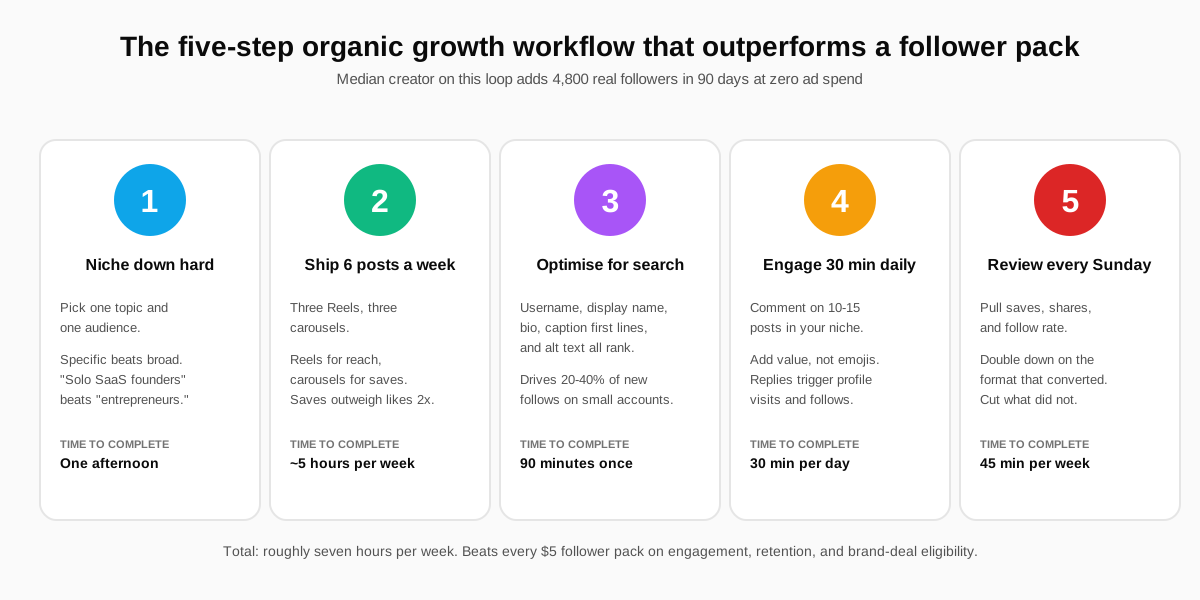
- Niche down hard.Pick one specific topic and one specific audience. "Solo SaaS founders" beats "entrepreneurs." A narrow niche makes every other step ten times more efficient because the algorithm and your audience can both pattern-match you faster.
- Ship six posts a week. Three Reels for reach, three carousels for saves. Reels surface in the recommendation system and bring new viewers. Carousels rank by saves, which weigh roughly 2x likes in the 2026 ranking model and signal deep engagement.
- Optimise for search. Username, display name, bio, the first line of every caption, and the alt text on every image are all ranked by Instagram search. Our Instagram search queries optimization playbook covers the field-by-field tactics. Search drives 20 to 40 percent of new follows on small accounts.
- Engage 30 minutes a day. Comment on 10 to 15 posts inside your niche every day. Add value, not emojis. Replies trigger profile visits, and profile visits convert to follows at roughly 12 percent for an optimised Instagram bio.
- Review every Sunday. Pull saves, shares, and follow rate from your top three posts of the week. Double down on the format that worked. Cut what did not. The whole review fits in 45 minutes.
For the operational side of running this loop without the manual labour, the SocialCRM composer handles the cross-platform scheduling, AI brand-voice drafting, and the Sunday analytics pull in one pass. The full walkthrough lives in our complete SocialCRM guide. Pair it with the best times to post on Instagram playbook for the timing layer.
When the temptation to buy followers is strongest
The desire to buy cheap Instagram followers does not arrive at random. It hits hardest at three specific moments, and naming them in advance makes the trap easier to spot.
| Trigger | Why it feels urgent | The actual fix |
|---|---|---|
| Brand-deal pitch is due tomorrow | Sponsor minimum is 5,000, you have 1,200 | Pitch the smaller-deal tier, not a fake number |
| Account hits a 6-week plateau | Real growth feels broken | Audit the last 10 posts for niche drift |
| Competitor jumps from 4k to 40k overnight | Pressure to match the appearance | Their numbers are usually fake too |
| Launch day for a product or service | Empty-account social proof feels weak | Lead with case studies, not follower count |
| Algorithm change tanks reach | Looks like the account is dying | Wait two weeks, reset only if real drop holds |
Each trigger has a real solution that does not involve a follower purchase. The plateau is usually a niche-drift problem solvable in one weekend. The brand-deal mismatch is solvable by targeting the correct sponsor tier. The competitor jump is almost always fake on closer inspection (a quick HypeAuditor scan settles it). Naming the trigger ahead of time short-circuits the buy impulse.
FAQ
Are cheap Instagram followers safe to buy?
No. Every tier violates Meta's Community Guidelines on inauthentic activity. The cheapest bot packs are detected and removed within 24 to 48 hours. The pricier human-farm tiers still fail brand-deal audits and trigger an engagement-rate collapse that the recommendation system reads as a quality signal. Repeat purchases are the most common path to a permanent suspension.
How much do cheap Instagram followers cost in 2026?
Bot followers run roughly $1 to $5 per 1,000, drop-protected bot packs $5 to $15 per 1,000, aged or recycled accounts $25 to $60 per 1,000, and click-farm humans $80 to $200 per 1,000. The pricier tiers look more convincing on the surface but carry the same brand-deal disqualification risk and a similar engagement-rate collapse.
Will Instagram know if I bought followers?
Yes. Meta's automated systems flag follower-to-following ratios above 50 to 1, default-avatar accounts, profiles under three posts, batch-follow timing, and IP geographic clustering. Most cheap follower purchases trip at least three of those signals within 48 hours. Brand-deal auditors using HypeAuditor, Modash, or Phlanx surface bought followers in under a minute.
Why does my engagement rate drop after buying Instagram followers?
Engagement rate is likes plus comments divided by follower count. Cheap followers add to the denominator without adding to the numerator. A 4 percent rate on 1,000 real followers becomes 0.7 percent after a 5,000 bot pack lands. The recommendation system reads the new ratio as a quality drop and reduces reach on subsequent posts, which depresses the rate further.
Can I remove fake followers I bought from my Instagram account?
Partly. You can manually remove followers one by one in the followers list, or use Instagram's bulk-remove tool inside the Followers tab. Bots Meta has already flagged are removed automatically over the following weeks. The harder fix is the engagement-rate signal, which takes one to three months of consistent organic content to reset on the recommendation system.
What is a healthy Instagram engagement rate in 2026?
For accounts under 10,000 followers, a healthy engagement rate sits between 3 and 6 percent. Between 10,000 and 100,000 followers, healthy lands at 1.5 to 3 percent. Anything below 1 percent on a small account signals fake followers, a fatigued audience, or a niche mismatch. Brand-deal audits typically require above 1.5 percent.
TL;DR
- Cheap Instagram followers are bots, not buyers. The $5-per-1,000 tier is empty profiles. The pricier tiers look more convincing but fail brand-deal audits all the same.
- Detection is fast and cheap. Meta removes bot packs in 24 to 48 hours; brand-deal auditors flag the purchase in under a minute.
- Engagement rate collapses 80 to 90 percent.Reach suppression and a brand-deal cliff follow within a week. The cost compounds well past the sticker price.
- The five-step organic loop wins on every metric.Niche, ship six posts a week, optimise for search, engage 30 minutes daily, review every Sunday. Roughly seven hours per week.
- Name the trigger that tempts the purchase. Plateau, brand-deal mismatch, competitor jump, launch day, algorithm scare. Each one has a real fix that beats the buy.