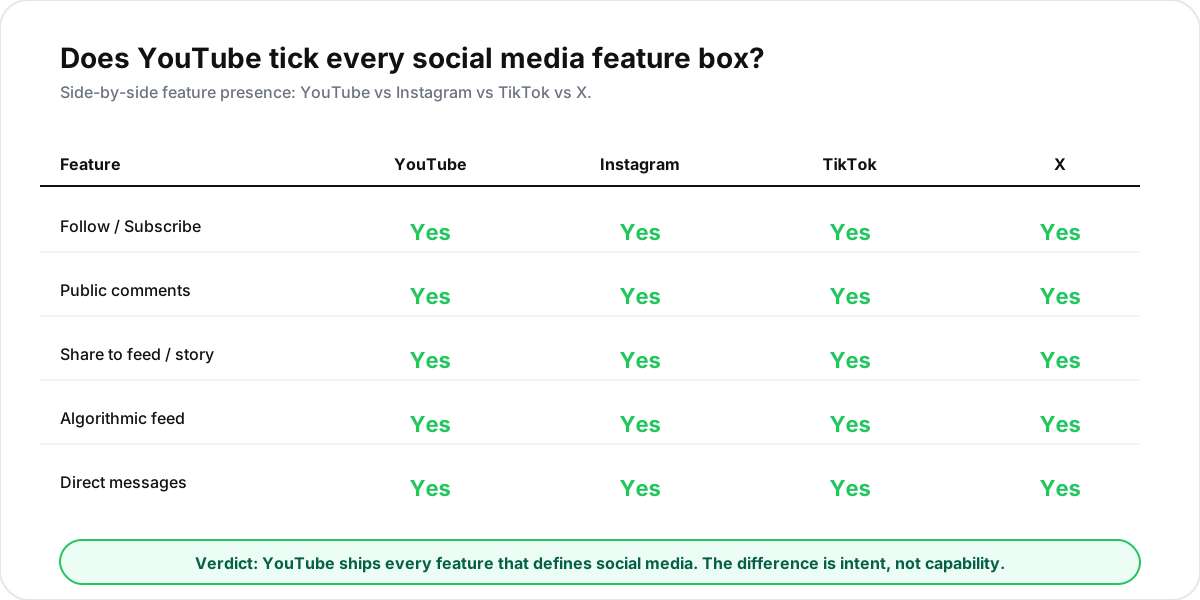
The short answer:Yes, YouTube is social media. It carries every feature that defines a social network: public profiles, a follow graph (subscriptions), comments, likes, shares, an algorithmic feed, and direct messages. The reason some people argue it is not is that YouTube's biggest traffic source is search, not a feed, which makes the social mechanics quieter than on Instagram or TikTok. The mechanics are there, they just operate differently.
What counts as social media in 2026?
Social media is any platform that lets users create public profiles, follow other users, publish content, and interact with that content through likes, comments, shares, or messages. Anything that ticks all four boxes is a social network. Anything that ticks three is in the grey zone, and most platforms in the grey zone get classified as social media in practice.
The Pew Research Center, the UK Office for National Statistics, and the Australian eSafety Commissioner all classify YouTube as social media in their public reporting. Apple Screen Time and Google Family Link group it with Instagram and TikTok for time limits. Pew's annual social media fact sheet tracks YouTube usage alongside Facebook and Instagram. When regulators, researchers, and operating systems all agree, the definitional debate is over.
The features YouTube ships that make it social
Walk through the eight core social-network features and YouTube has every one of them, often in more sophisticated forms than its peers.
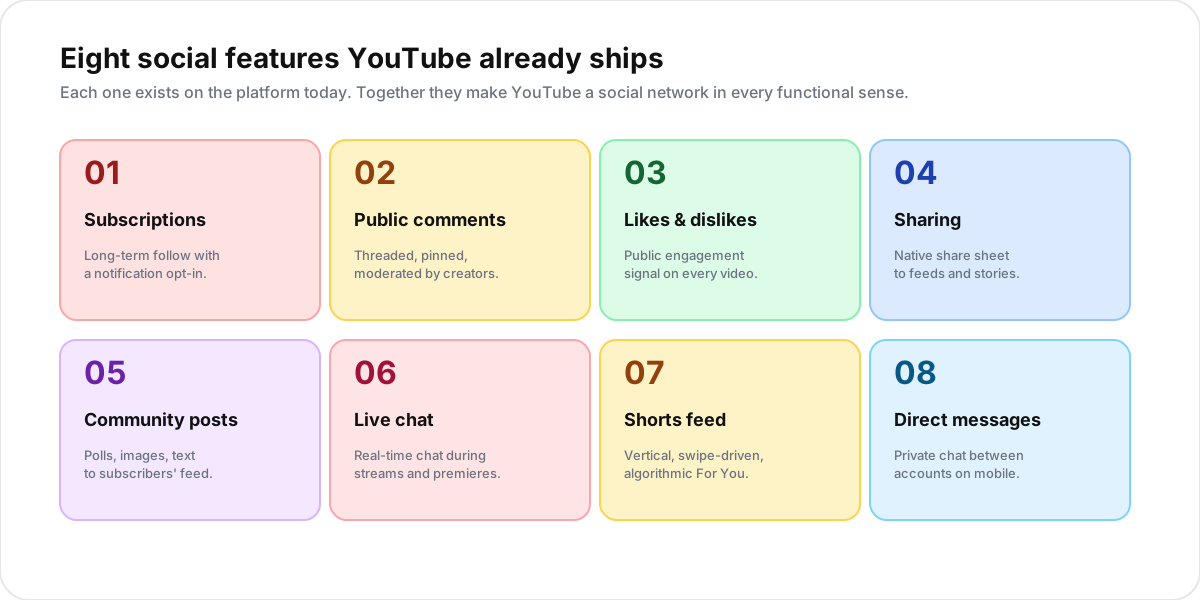
- Subscriptions. A persistent follow with an opt-in notification bell. Functionally identical to a follow on Instagram, with a stronger long-term signal.
- Public comments. Threaded, pinnable, heart-able by the creator. The comments section under a popular video can carry hundreds of thousands of replies.
- Likes and dislikes. Public engagement signal on every video. Dislikes are no longer public, but the like count remains a primary social proof element.
- Sharing. A native share sheet that pushes videos into Instagram stories, X posts, WhatsApp chats, and email. YouTube is the most-shared video platform on the open web.
- Community posts.Polls, images, and text updates that drop directly into subscribers' home feeds. This is a feed-style social surface most people forget exists.
- Live chat. Real-time chat during streams and premieres, with super-chats, moderator tools, and slow-mode controls.
- Shorts feed. Vertical, swipe-first, algorithmic For You feed that runs on the same engagement logic as TikTok and Instagram Reels.
- Direct messages. Private chat between accounts on mobile, currently rolling out to more regions and limited to channels with mutual interaction.
How YouTube is different from feed-first social platforms
YouTube is social media, but it is not the same shape of social media as Instagram or TikTok. The difference shows up most clearly in where its traffic comes from.
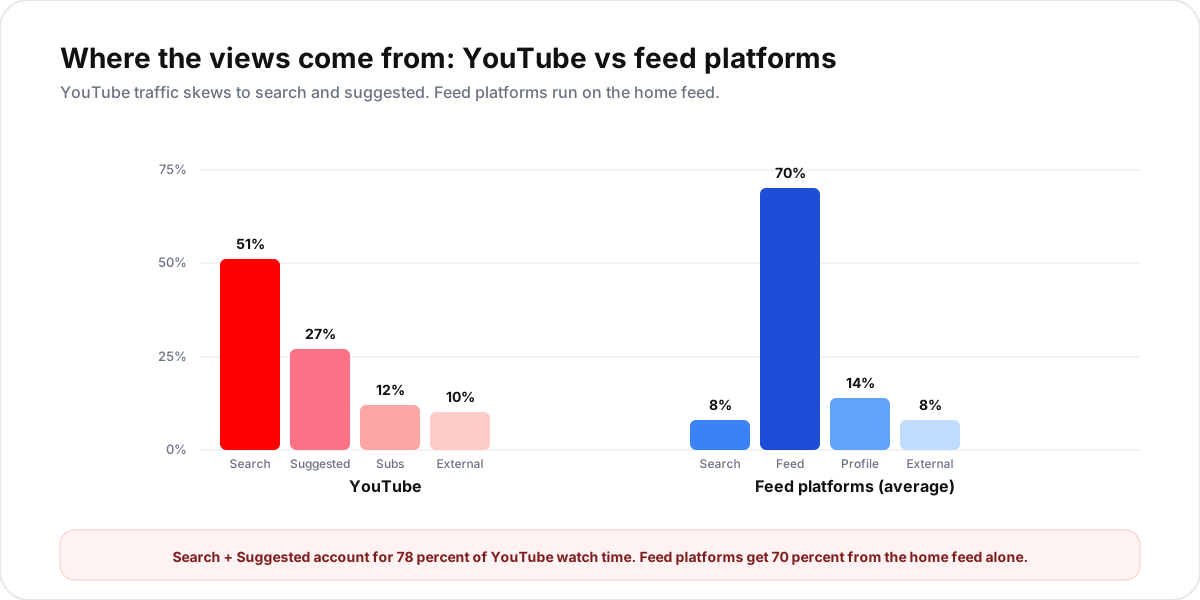
Three structural differences follow from that traffic mix.
- Content is evergreen. A YouTube video published in 2022 can still pull six-figure views in 2026 if it answers a search query. An Instagram post from 2022 is unreachable for practical purposes.
- Watch time matters more than reach. YouTube's ranking signal is session minutes, not impressions. Long videos with high retention beat short videos with high impressions.
- The follow graph is a secondary signal. Subscriber count is a vanity metric on YouTube. Watch time from non-subscribers is the metric the algorithm actually optimises for.
Is YouTube more like search or more like social?
The most useful mental model: YouTube is social media that runs on a search engine. The search engine is the front door for over half of the platform's traffic; the social features are how people decide whether to keep watching once they have arrived.
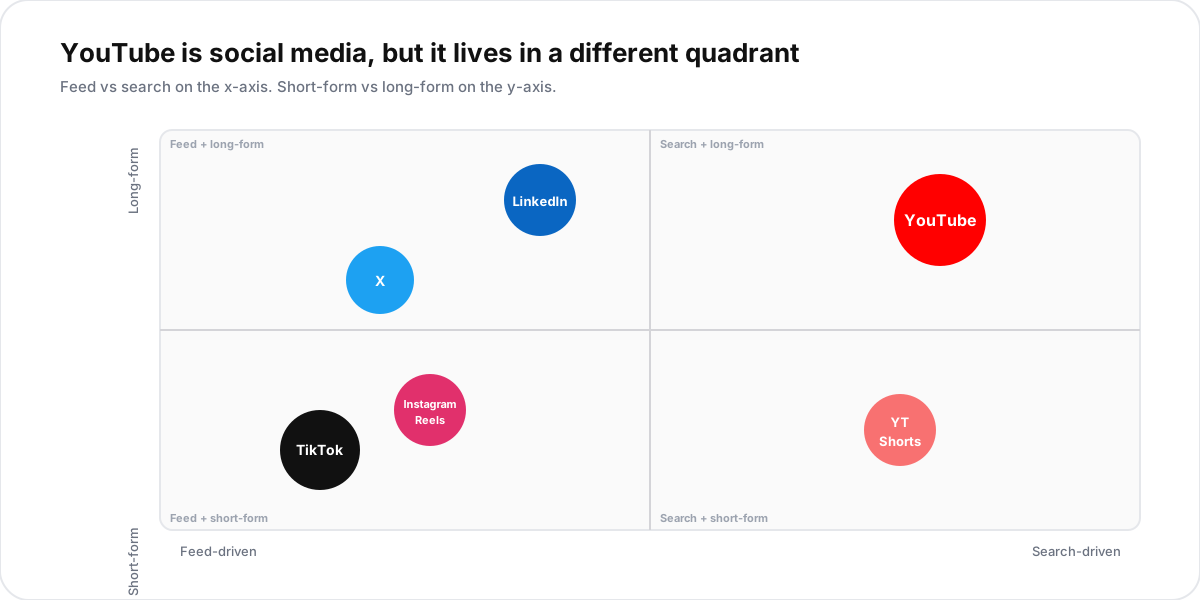
The closest analogue is LinkedIn or Reddit, both of which are unambiguously social but lean on search and topical interest graphs rather than a chronological home feed. Treating YouTube like Instagram (post often, follow trends, expect feed reach) is how most brands waste their first year on the platform.
What this means for creators and brands
If YouTube is social media, the channel deserves a slot in your social plan. If it is search-driven social media, that slot looks different from your Instagram or TikTok slot.
- Plan from queries, not from trends. Pick three to five searches your audience makes every month and own them. Title each video to match the query verbatim.
- Invest in thumbnails like ad creative. On a search-driven platform, the thumbnail is the click-through-rate lever. Iterate on it the way an advertiser iterates on a hook.
- Use Shorts for reach, long-form for revenue. Shorts is the cheap distribution surface; long-form converts to subscribers, watch time, and ad revenue. Cross-link them.
- Repurpose, do not reinvent. Long-form YouTube videos can fan out into clips for Instagram Reels and TikTok, quote graphics for X and LinkedIn, and audio for a podcast feed.
- Treat the comments section as a research feed. The questions in your top videos' comments are your next month of titles. No other social platform gives you this level of evergreen audience research for free.
Common counter-arguments, addressed
A handful of objections show up every time the "is YouTube social media" question gets debated. None of them survive a close look.
- "Most people just watch." True of every social platform. The 1-9-90 rule (1% creators, 9% engagers, 90% lurkers) describes Instagram, TikTok, and Reddit too.
- "There is no DM by default." DMs exist on mobile, with channel mutual-interaction gating. The gating exists on Instagram and TikTok too.
- "The follow graph does not drive reach." Less than on Instagram, more than on TikTok. None of the three are pure follow-graph platforms in 2026; all three run on a hybrid algorithm.
- "You go there for video, not for friends." People go to TikTok for entertainment, to LinkedIn for jobs, and to Reddit for communities. Reasons for visiting do not change platform classification.
FAQ
Is YouTube the largest social media platform?
By logged-in monthly active users, YouTube sits at roughly 2.7 billion as of 2026, second only to Facebook's properties when reported as a single network. By time spent, it is the most-used social platform in many markets, including the United States, the UK, and Australia.
Does YouTube count as social media for COPPA and other regulations?
Yes. Regulators classify YouTube as a social media service for child-safety, advertising, and data-protection rules. That is why content marked "made for kids" gets stripped of personalised ads, comments, and the notification bell.
Is YouTube Music or YouTube Premium social media?
They sit on top of the same social network. Subscribing to a channel through YouTube Music or watching ad-free through YouTube Premium uses the same identity, the same comments system, and the same recommendations.
Is a YouTube channel a social media account?
Yes. A YouTube channel is the equivalent of an Instagram profile or a TikTok handle: a public identity that can be followed, that publishes content, and that can be messaged and engaged with.
TL;DR
- YouTube is social media. It ships every defining feature.
- It runs on search and suggested rather than a home feed, so the social mechanics are quieter than on Instagram.
- Subscriptions, comments, likes, shares, community posts, live chat, Shorts, and DMs all live inside the app.
- Plan YouTube as search-driven social media: optimise for queries, retention, and thumbnails, not for trends.
- For brands, YouTube is the evergreen, compounding channel in the social mix. Skip it at your peril.